
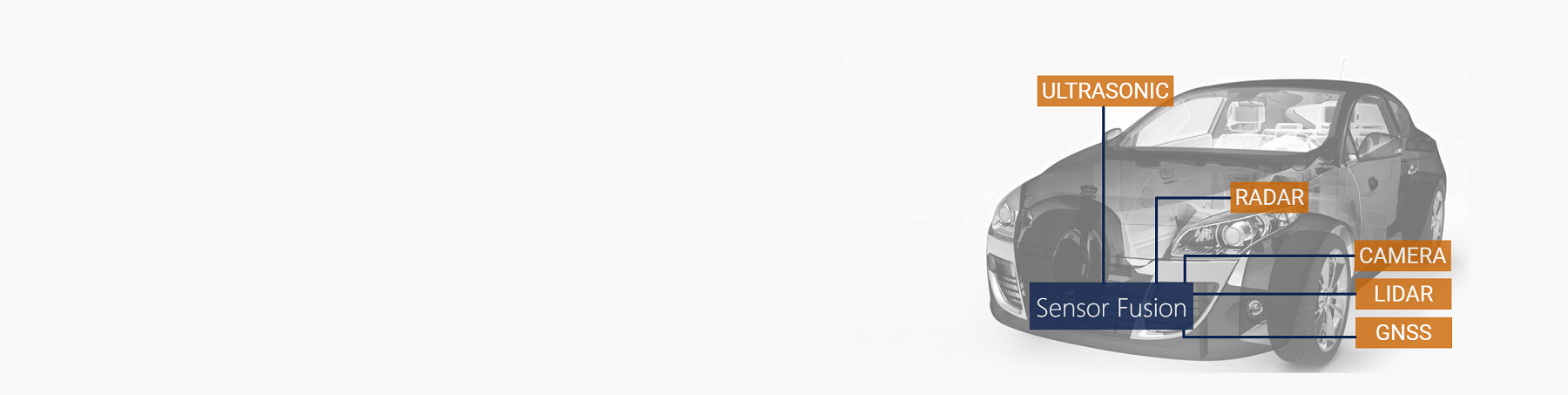
Multiple Sensors Simultaneously • Complete HW and SW Combined HIL Test Systems • Connectivity to Drive Simulators
Konrad Technologies ADAS test solutions offer a unique approach to sensor characterization and testing with its scalable system to conduct both measurement-based and system simulation-based tests with a single test system. The combination of ADAS Sensor Fusion test with a hardware-in-the-loop (HIL) test system enables a new level of test capability in the automotive environment. Individual systems, sub-systems, and sensors in a vehicle can be simulated and tested in real-time with a simulated scenario by using the KT ADAS HIL Sensor Fusion Test Workbench.
 As radar sensors continue to increase in design complexity to deliver multiple capabilities for the transportation industry, Tier 1 suppliers continue to innovate on new technology to drive down costs. And as the demand for automotive radar technology and applications continues to increase, their test routines have evolved from simple to complex test protocols in order to adequately verify functional performance of the sensors themselves and for the intended use cases. The combined use of scenario-based testing and RF measurements can be effectively used to verify functional performance of the radar sensors for their specific application use case environment or conditions. This white paper will discuss the changing requirements for radar test and how they can be addressed using the Konrad Technologies Vehicle Radar Test System (KT-VRTS) that is built on the National Instruments platform.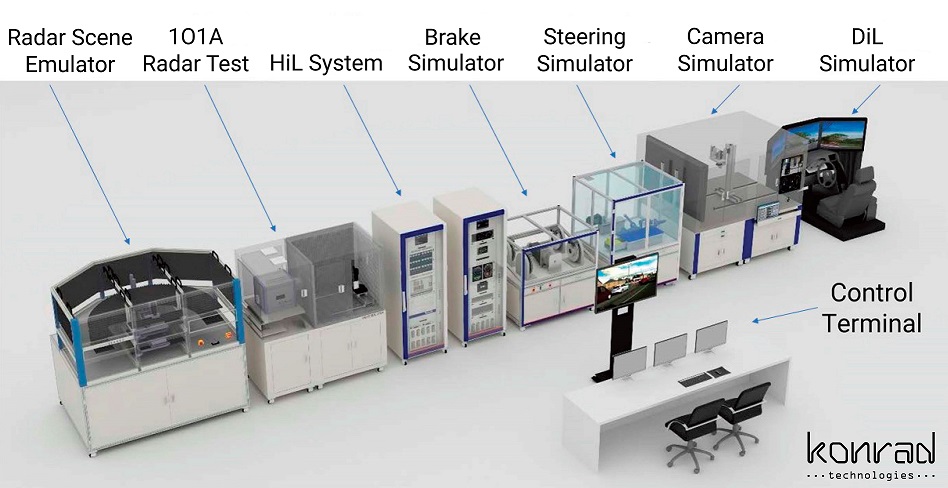
 Driver in the Loop (DIL) test is a proven methodology to verify embedded software performance in automotive controllers with human input. Adding sensors to the DIL test further narrows the gap with ground truthing and the costly system update iterations that follow and enables a higher degree of reproducibility and repeatability tests to quickly optimize on feature performance for Automated Driver Assistance Systems (ADAS) and Autonomous Driving (AD).
 As Automated Driver Assistance Systems (ADAS) and Autonomous Driving (AD) functionality gain


